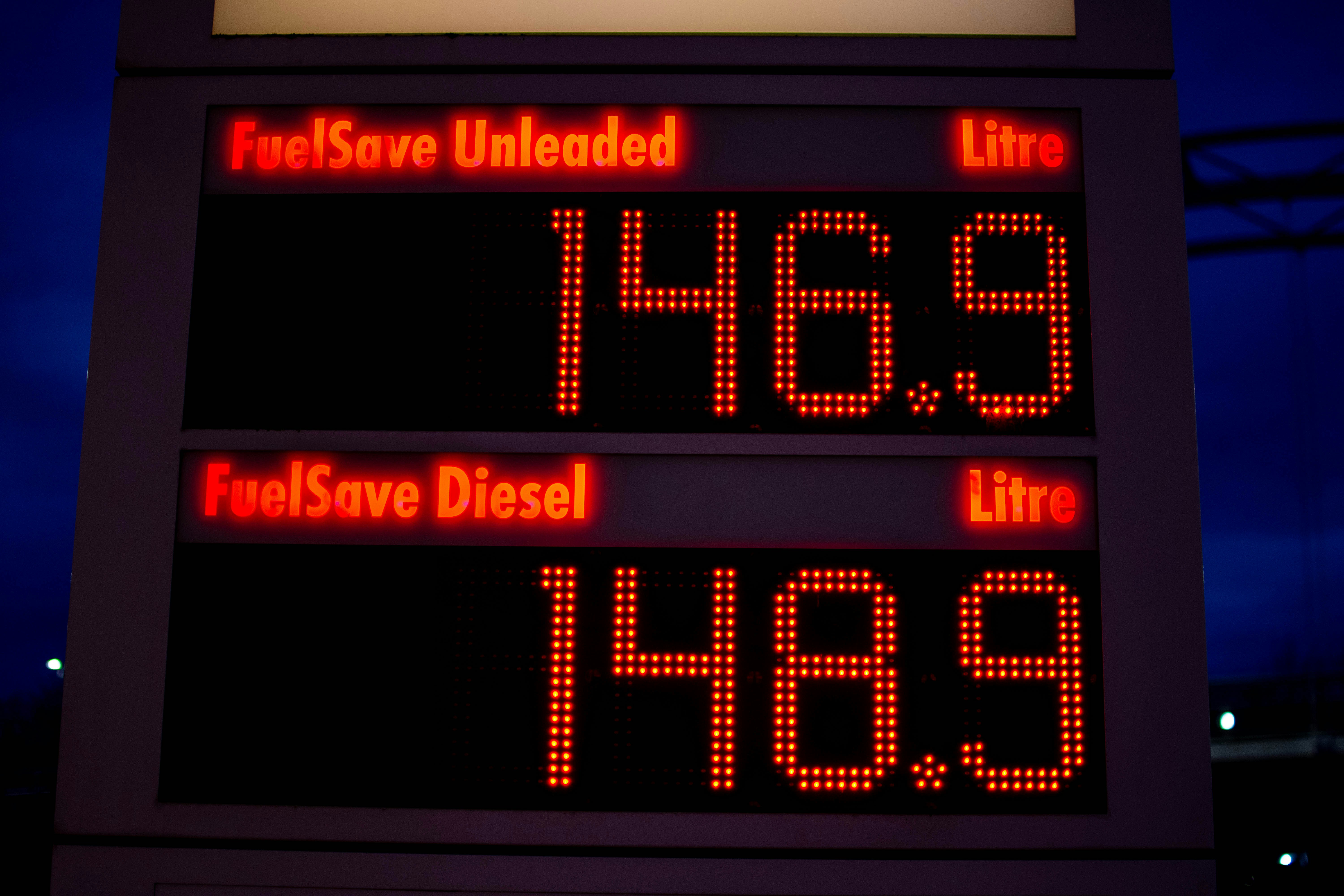
You pull onto the forecourt, the pump ticks over to £60, and you drive off wondering how on earth a tank of fuel costs as much as a weekly shop. It's a fair question — and the answer is that the price on the display isn't really one price at all. It's five separate things stacked on top of each other, and only one of them actually pays for the petrol.
Here's the full breakdown of what goes into every litre you pump, why it ends up so expensive, and why the forecourt three miles down the road can charge a completely different price for the same fuel.
What's actually in a litre of petrol?
A typical litre of unleaded at around 140p breaks down roughly like this:
- Fuel duty — around 53p (a flat tax set by HM Treasury)
- VAT at 20% — around 23p (charged on everything, including the fuel duty)
- Wholesale fuel cost — around 50p (crude oil, refining, delivery)
- Retailer margin — around 8–12p (what the station actually keeps)
- Biofuel obligation and small levies — a penny or two
Add it all up and roughly half of what you pay is tax. That single fact is the main reason UK pump prices feel eye-watering — and it's also why pump prices don't plunge every time crude oil does.
Let's go through each component properly.
1. Fuel duty: the biggest single slice
Fuel duty is an excise tax levied per litre, not per pound. It doesn't matter whether petrol is 120p or 180p a litre — the duty stays the same.
The current rate is 52.95p per litre, including the temporary 5p cut introduced in March 2022 during the energy crisis. That cut was extended again at Budget 2025 and is currently due to run until the end of August 2026, after which rates are scheduled to rise back gradually towards their pre-2022 level.
Fuel duty raises around £25 billion a year for the Treasury, according to the House of Commons Library. It's charged at the same rate on petrol and diesel, has been frozen in cash terms for over a decade, and it applies before VAT — which brings us neatly to the second tax.
2. VAT: a tax on a tax
VAT is charged at 20% on the whole pump price. That includes the fuel duty. Yes — you pay tax on the tax.
If the pre-VAT cost of a litre of petrol is 117p, you add 20% VAT on top to get 140p. Of that 23p of VAT, about 10p is VAT on the fuel duty itself. It's a quirk of how excise duties and VAT interact in UK law, and it's entirely normal — alcohol, tobacco and insurance work the same way — but it does mean that when wholesale prices spike, the Treasury's tax take rises automatically too.
Between fuel duty and VAT, tax typically makes up 48–52% of the pump price for petrol, and slightly less for diesel.
3. The wholesale cost: crude oil, refining and delivery
Everything that isn't tax or retailer margin gets bundled into what the industry calls the wholesale price. That's the price your local station pays their supplier, and it's driven by three things:
Crude oil is the big one. The UK benchmark is Brent Crude, priced in US dollars per barrel on the Intercontinental Exchange. When Brent rises, wholesale petrol rises — usually within days. A weaker pound makes it worse, because we buy crude in dollars.
Refining margins turn crude into finished fuel. Margins widen when refineries are stretched (after storms, geopolitical shocks, or planned maintenance) and narrow when there's a glut.
Distribution and storage — moving the finished product from refinery or import terminal to forecourt by tanker, plus the cost of the biofuel content required under the Renewable Transport Fuel Obligation (the reason standard unleaded is now E10).
Wholesale prices typically account for around 35–40p of your pump price at current crude levels. When Brent spikes, this number climbs fast — you can see how wholesale moves have fed through to pump prices on our UK fuel price trends charts.
4. The retailer margin: where it gets interesting
After tax and wholesale, what's left is the retailer margin — what the station actually keeps per litre to cover staff, rent, business rates, card fees, the shop, and profit.
In a competitive market, retailer margin on fuel has historically been about 5–7p a litre. But the Competition and Markets Authority's road fuel market study — the one that eventually led to the Fuel Finder scheme this site uses — found that supermarket fuel margins roughly doubled between 2019 and 2023, and the gap between supermarket and non-supermarket prices widened considerably. The CMA estimated the combined effect of higher supermarket margins between 2019 and 2022, plus further diesel margin increases in 2023, cost UK drivers around £2.5 billion in total.
The CMA also identified what they called the "rocket and feather" effect: pump prices rise quickly when wholesale costs go up, but fall slowly when wholesale costs come down. You've almost certainly noticed it — stations are quick to push prices up after an oil shock, but drag their feet on the way down. This is exactly why the Fuel Finder scheme exists: by making station-level prices public in real time, it gives drivers (and sites like ours) the ability to spot stations that are overcharging and shop around.
5. Why the station three miles away can be 20p cheaper
Here's the thing that surprises people most. Once you understand the breakdown, it's obvious why neighbouring stations can differ by 15–20p a litre for identical fuel.
Tax is fixed. Wholesale is near-identical. That means the entire price variation between stations is coming out of the retailer margin — and the margin depends almost entirely on local competition and operating costs.
A supermarket with cheap land, high volumes and a loss-leader strategy to pull people into the store can afford a 2p margin — which is why you'll typically see Tesco, Asda and Morrisons leading the cheapest-end of the market. A motorway service area run by operators like MFG or Welcome Break, with a captive audience and enormous site costs, charges 15–20p more. An independent on a village A-road sits somewhere in between. Same fuel. Radically different prices.
This is exactly the gap our live UK fuel price map is built to exploit. Compare stations side-by-side before you leave the house, and you can save £15–£25 a month without changing anything else about how you drive.
So is petrol too expensive in the UK?
Compared to most of Europe, UK pump prices are middling. Compared to the US, they're brutal. The reason is almost entirely tax: the fuel itself costs roughly the same as it does anywhere else in the developed world, but UK drivers pay one of the higher fuel-duty rates in Europe, plus 20% VAT on top.
You can't do anything about the tax. You can't do much about crude oil. What you can do is make the retailer margin work in your favour by comparing local prices before you fill up — which takes about ten seconds and, over a year, is worth well into three figures for the average driver.
The TL;DR breakdown
For a typical 140p litre of UK unleaded in 2026:
| Component | Amount | Share |
|---|---|---|
| Fuel duty | ~53p | 38% |
| VAT (20%) | ~23p | 17% |
| Wholesale (crude + refining + distribution) | ~50p | 35% |
| Retailer margin | ~12p | 9% |
| Biofuel / other levies | ~2p | 1% |
Tax makes up just over half. Wholesale costs move with crude oil and the pound — you can track UK pump prices over time to see exactly how. Retailer margin is the only bit that varies hugely from station to station, and the only one you can actually influence by shopping around.
Sources and further reading
- Fuel duty rates 2026 to 2027 — HM Treasury and HMRC: gov.uk/government/publications/fuel-duty-rates-for-2026-to-2027
- Petrol and diesel prices — House of Commons Library research briefing: commonslibrary.parliament.uk/research-briefings/sn04712
- Taxation of road fuels — House of Commons Library research briefing: commonslibrary.parliament.uk/research-briefings/sn00824
- Road fuel market study — Competition and Markets Authority: gov.uk/cma-cases/road-fuel-market-study
- Check if you need to pay fuel duty — HMRC guidance: gov.uk/guidance/fuel-duty
- Access fuel price data (Fuel Finder scheme) — Department for Energy Security and Net Zero: gov.uk/guidance/access-fuel-price-data
All figures in this article were verified against the sources above on 21 April 2026. Pump prices quoted are illustrative based on current UK averages; for live prices at every UK forecourt, use our fuel price map.
About the author — Wayne founded PetrolFinder UK in 2025. The site tracks live pump prices at more than 7,500 UK forecourts using the UK government's official Fuel Finder dataset, updated every five minutes. PetrolFinder UK is licensed under the Open Government Licence v3.0 for its use of CMA/DESNZ data. Read more about us.
About PetrolFinder UK — We track live petrol and diesel prices at every UK forecourt using the government's Fuel Finder dataset, updated every 5 minutes. Find the cheapest fuel near you → · Price trends · Price breakdown tool · Weekly report
Data sources used in this article: UK government Fuel Finder scheme data (Competition and Markets Authority / Department for Energy Security and Net Zero), HM Revenue & Customs fuel duty rates, House of Commons Library briefings on road fuel taxation, and the Competition and Markets Authority's road fuel market study. See the full source list at the bottom of the article.

Comments
Loading comments…